The fundamental principles of patient assessment are the establishment of the correct diagnosis, identifying risk factors contributing to the diagnosis, and aggressively targeting therapies to maximize the impact on the underlying disease.
 DIAGNOSTIC SERVICES: DIAGNOSTIC SERVICES:
| ECHOCARDIOGRAPHY |
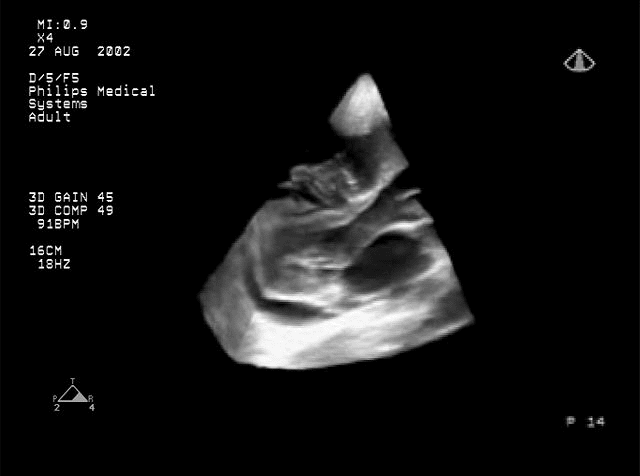
A non-invasive test using ultrasound waves similar to sonar to identify structural, functional and physiologic abnormalities. Measurements include heart chamber size, function,
blood flow direction, heart valve abnormalities, pressures within the heart.
The Ventura Heart Institute was
the first non-teaching hospital
private practice facility in the
Ventura, Los Angeles and Santa
Barbara Counties to acquire 3
dimensional echocardiography and
color volume capabilities.
This technology provides superior
spatial resolution of complex
heart conditions to further aid
in the correct assessment of a
patient’s anatomic and physiologic
diagnoses.
Dr. Loh has been involved with
2 dimensional echocardiography
since 1977, directed the echocardiography
laboratory at Los Robles Regional
Medical Center for 15 years and
has published research in the
use of echocardiography in the
diagnosis of coronary artery disease.
The Ventura Heart Institute began
using the added capabilities of
3 dimensional echocardiography
in 2003. In November 2006,
we upgraded to the latest Philips
iE33 state-of-the-art platform
to further enhance our capabilities
in 3-dimensional echocardiographic
imaging and diagnostics, but 3D
echo capability is no longer available
since VHI affiliated with Heart
Center Cardiology in 2014 which
opted not to support 3DE. |
Examples
of typical images obtained by 2-dimensional
and the 3-dimensional echocardiography
technology are provided below.
|
|
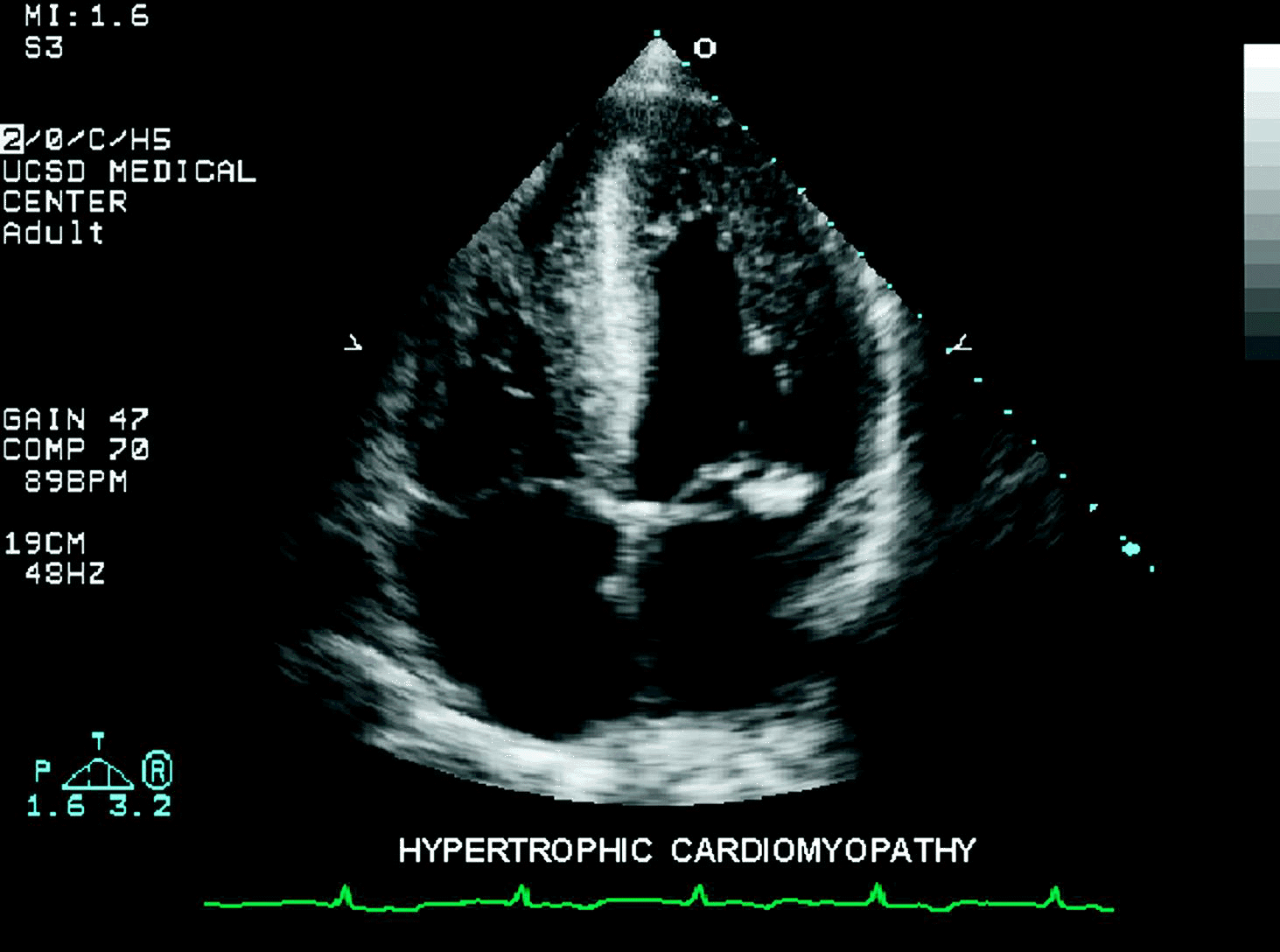
Routine 2-dimensional image of 4 heart chambers
|
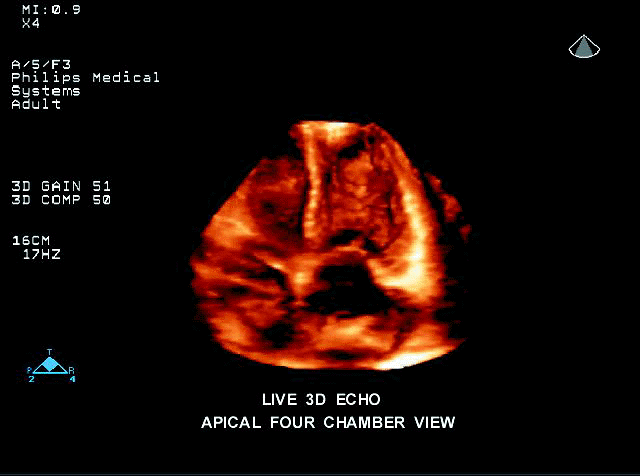
3-dimensional image of 4 heart chambers
|
|
|
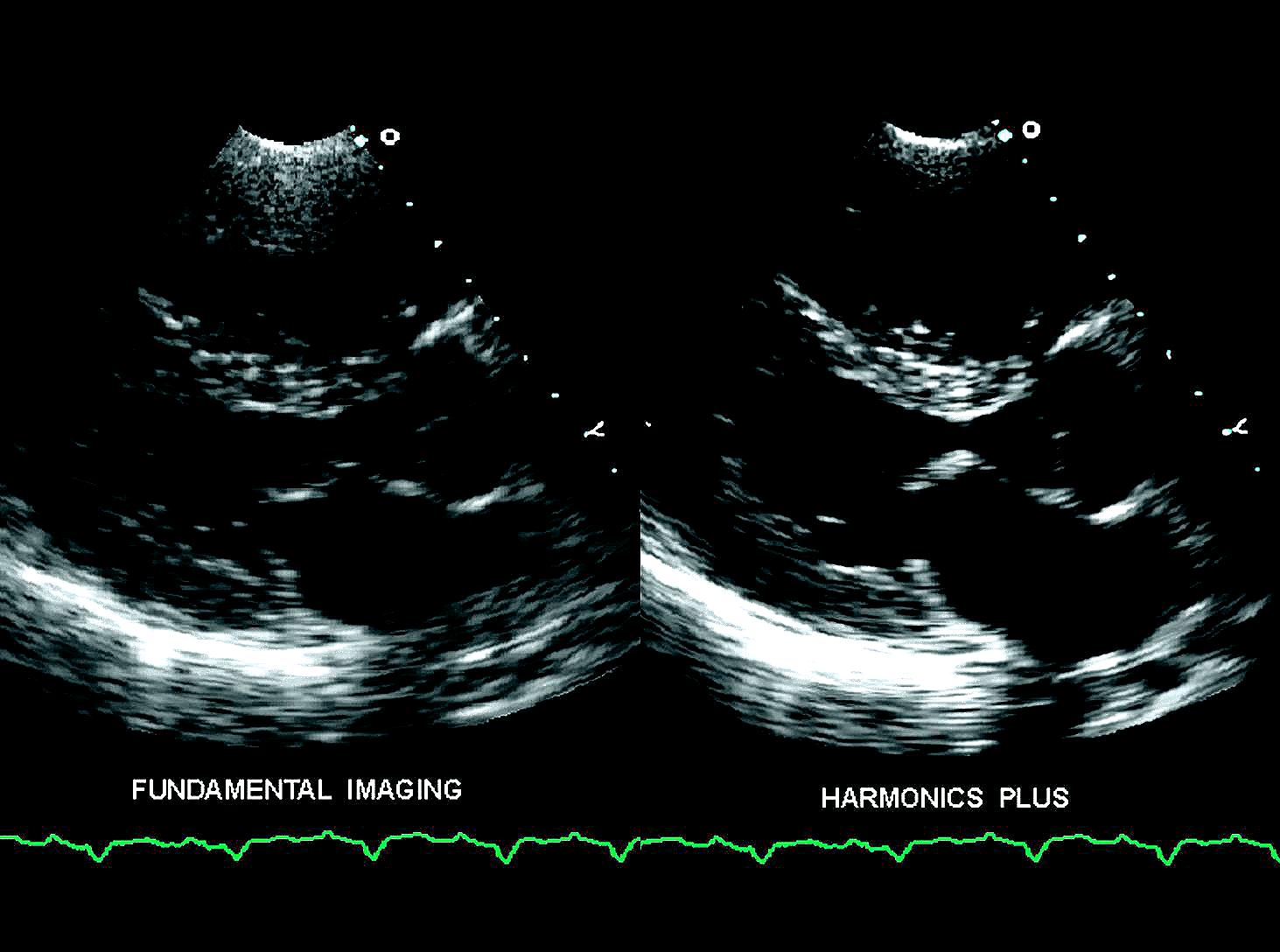
2-dimensional images of heart valve and chamber
|
3-dimensional image of heart valve and chamber |
|
STRESS
TESTS |
A
non-invasive approach to evaluate
the adequacy of coronary blood
flow to the heart muscle itself.
A progressive treadmill exercise
protocol appropriate for the
patient is utilized with rigorous
monitoring of the electrocardiogram,
the heart rhythm, blood pressure
and heart rate. These tests
can be done with or without
echocardiographic support. Echocardiography
enhances the diagnostic accuracy
to over 90%.
A
low level radioactive tracer
that distributes as does the
coronary blood flow can be used
to determine if the patient's
heart has any regions that may
not be getting adequate blood
flow, compared to a resting
evaluation. The stress
can be induced by an exercise
regimen or by a pharmaceutical
simulation of stress
|
|
EVENT
MONITOR |
A non-invasive test
that provides the ability to
detect, characterize and properly
diagnose underlying heart rhythm
problems, especially in patients
with palpitations or “skipped
beats”.
For one day or up to several
weeks, a portable recording
device can be attached to the
patient. Some devices are always
“on” so that any irregularities
in heart beat are detected whether
or not the patient has any symptoms,
and other devices can be triggered
by the patient if any symptoms
are suspected. A diary is provided
so that any recognized symptoms
can be noted and correlated
with the recording.
This
test is most useful for patients
who get palpitations or other
symptoms, but not everyday.
|
PACEMAKER
CLINIC |
For
patients with implanted pacemakers,
evaluation of the function and
remaining battery life of their
device can be assessed and adjusted.
|
REMOTE
BLOOD
PRESSURE MONITORING |
Non-invasive
tools to document blood pressures
when away from the stresses
of visiting the doctor's office
are being evaluated.
This is very useful to establish
the diagnosis of “white-coat”
high blood pressure and save
the patient from unnecessary
treatments for high blood pressure.
However, Dr. Loh has alternate
protocols to assess white coat
hypertension.
|
ELECTROCARDIOGRAM
|
The
classic non-invasive test that
records the electrical activity
of the heart from 12 different
directions on the chest wall.
Characterization of heart rhythm
origin, propagation and heart
chamber sizes can be determined.
|
TREATMENTS:
Although
the diagnostic services listed above
are available to patients who are
referred by their own physicians or
who are even self-referred if allowed
by their insurance provider, the treatment
services of the Ventura Heart Institute
are available only to those who become
patients of Dr. Loh's consultative
practice.
| DISEASE MANAGEMENT |
Comprehensive
approach to the nutritional,
lifestyle, and pharmacologic
management and preventive strategies
of patients with coronary artery
disease, blood fat abnormalities,
high blood pressure, heart failure,
irregular heart rhythms.
It is focused on intervening
at the most critical points
that can most effectively alter
the course of a disease to optimize
the quality of care and patient
outcome.
|
Prior
Research Activities:
Dr. Loh has been a clinical investigator
since 1974 as a Staff Associate (intramural)
and Science Project Officer (extramural)
at the National Heart, Lung and Blood
Institute at the National Institutes
of Health (NIH). He chaired the hospital's
Institutional Review Board (IRB) for
18 years.The IRB over-sees clinical
research at Los Robles Hospital and
Medical Center in Thousand Oaks, CA.
The Ventura Heart Institute participated
in over 160 clinical research projects
(Phase I, II, and III) since the Institute
opened in 1987. These programs were
always at no charge to the patient.
Our
prior research projects developed
novel strategies for patients with
elevated cholesterol already on optimal
treatment, including trials involving
all of the statins, non-statin therapies
including a type of gene therapy (anti-sense),
and use of monoclonal antibodies to
further lower the LDL-cholesterol
(bad cholesterol).
|